
Great Lakes Steelhead: Fall Primer
Great Lakes Steelhead: Fall Primer
An Eight Weight original - October 2026
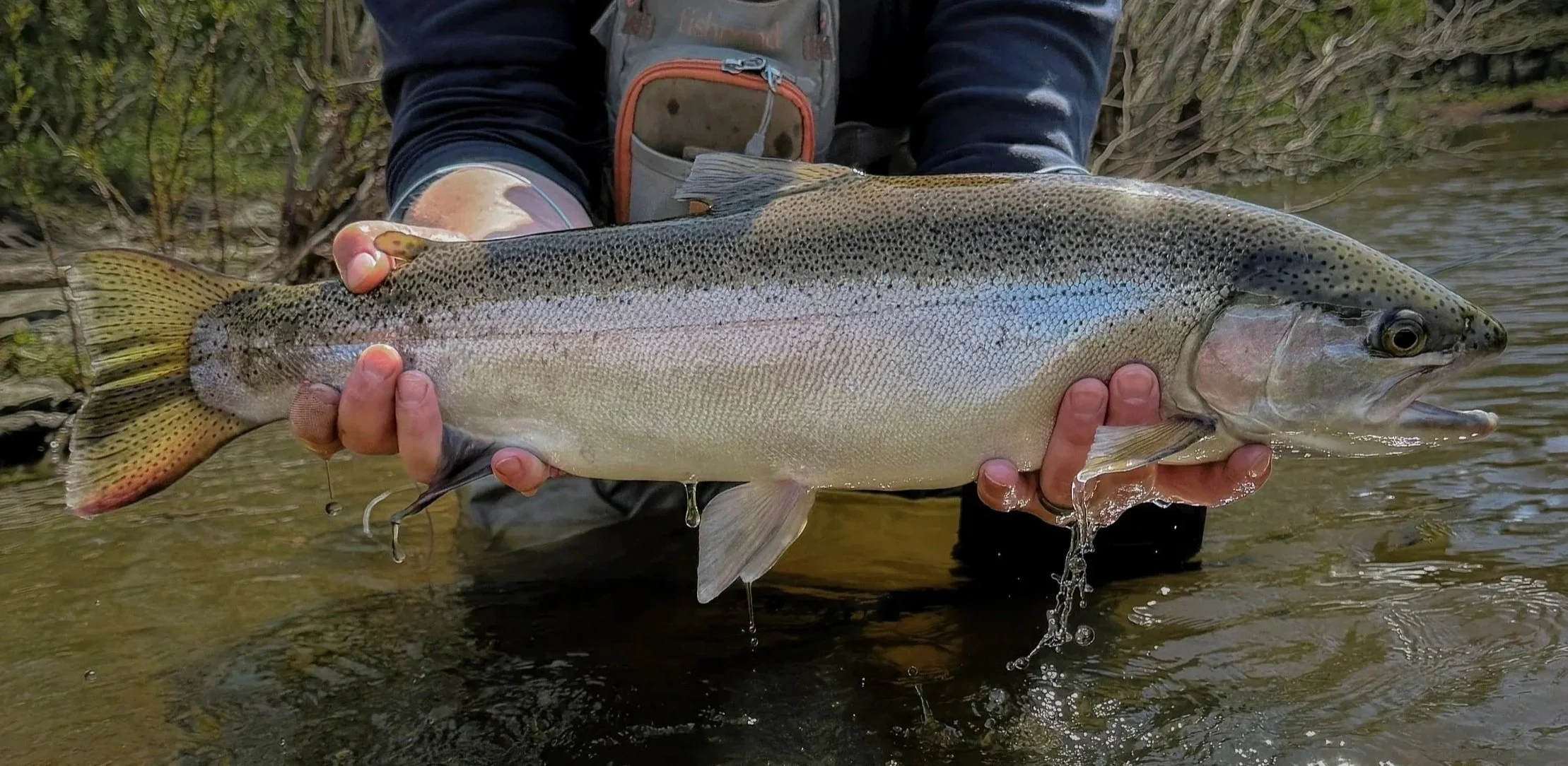
Cool October nights trigger visions of silver bullets in the minds of many Great Lakes anglers. With the changing of the seasons, we begin checking fishing reports and forecasts with increased earnestness in the hopes of crossing paths with early steelhead trout. Averaging around 5lbs and running waterways by the thousands, these migratory rainbows draw anglers from around the world. Steelhead Alley, comprised of dozens of tributaries along Lake Erie’s southern shoreline, stretches from Ohio’s Vermillion River to New York’s Cattaraugus Creek. This corridor enjoys a well-earned reputation as a top-flight fishery that cranks up this time of year. Fall action, beginning in the lake and lower rivers in September, consistently picks up and peaks in early December when fall and winter-run fish share the streams.
Staging Fish
In early fall, mature steelhead trout start to congregate or “stage” in the main lake near tributary mouths in anticipation of their inevitable run. The earliest action takes place in these staging areas, with anglers wading beaches or casting from break walls, jetties, or watercraft. Pods of fish travel in and out of the shallows in huge oval-shaped paths, bringing them within casting range, and those who can intersect their path with a fly may experience a lightning strike of a take that almost rips the rod from their hands. Open-water steelhead, bright chrome and full of energy, are an absolute blast. They’ll pull plenty of drag and may go airborne multiple times before being corralled.
Nine foot, 8-weight single hand rods with floating or slow-sinking lines perform well when paired with 9-foot fluorocarbon leaders and streamers in sizes 4 to 10. It’s not usually necessary to get flies super deep, so lines with intermediate, type 3, or type 4 tips work well, with extra points awarded for lines with clear tip sections. Many flies will work, with Wooly Buggers, rabbit strip Zonkers, and Weixlmann’s Little Precious all great options in whites, blues, olives, chartreuse, and black. Seasoned anglers will employ varied and erratic retrieves to catch the attention of nearby fish. It’s impossible to out-strip a steelhead, so don’t be afraid to burn flies in on occasion. The outflows themselves can also be used by swing and indicator anglers to carry offerings to proximal fish, which will often sit right on the seam between the current and the slack water of the lake.
Fly casting into Lake Erie can be daunting as we are, of course, rather limited in how much water we can cover in such a vast inland ocean. There are, however, some tactics we can employ to maximize our chances of success. Prime times to fish the beaches and river mouths are during the low-light periods of dawn and dusk. Cloudy or overcast weather can extend these windows a bit as well. Fan casting on the down-wind side of a tributary mouth is a great place to start, as the fish are drawn in by the river’s scent as its blown east or west with the wind. Light or southerly winds and clear water are also important as they aid casting and help fish locate our flies.
Tributary Fishing
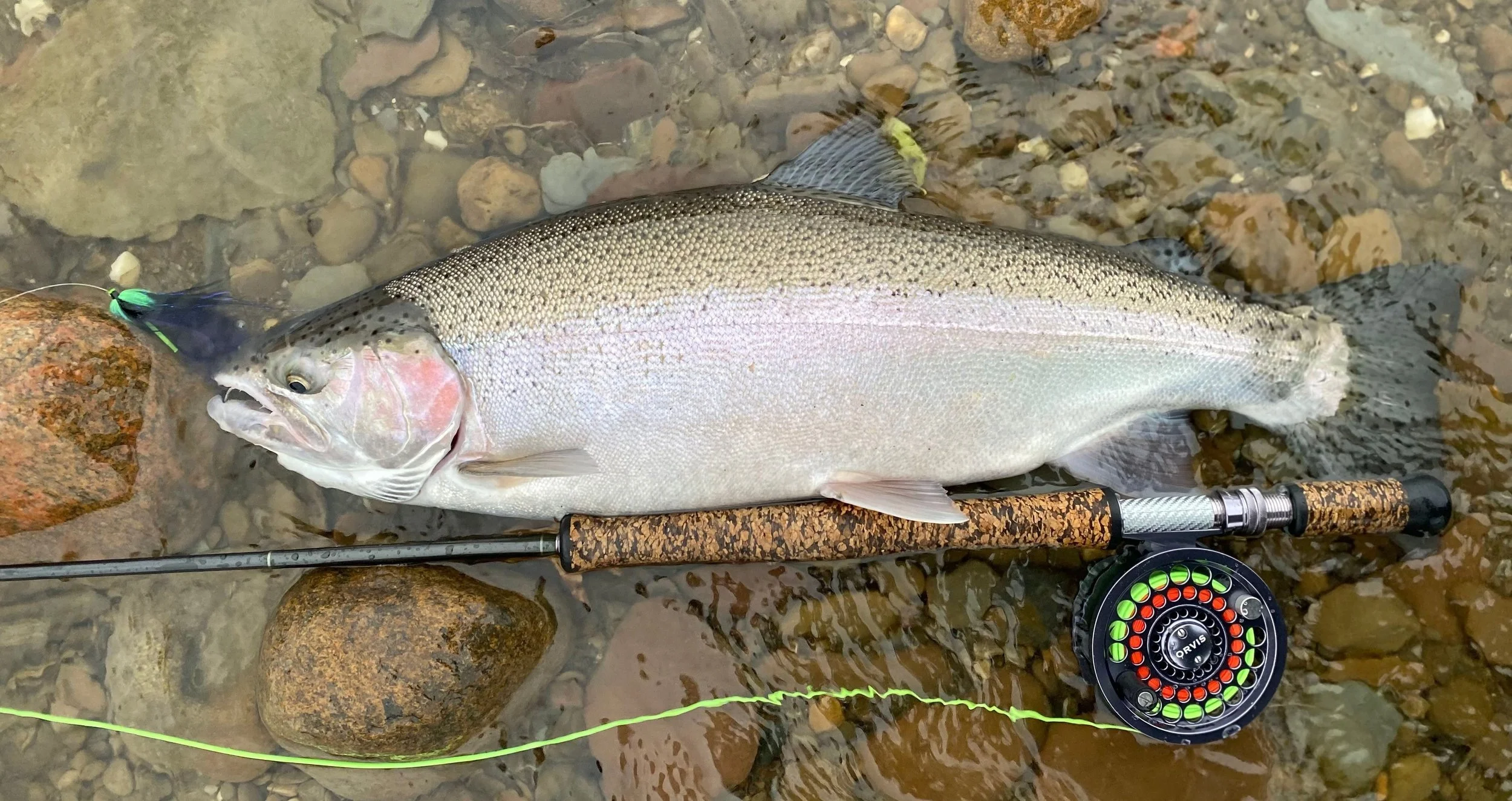
Staging fish push into the lowest stretches of the rivers with precipitation and cool temperatures, potentially entering and exiting several times before the main run occurs later in the fall. These early fish retain much of their main-lake characteristics, meaning they’re still programmed to actively chase and hunt bait. Fresh fish are notorious for their vicious strikes and propensity to fight wildly when hooked. Thus, while numbers may be low early on, the experience will likely be well worth the effort for those willing to search fish out.
Anglers should hit the lower rivers as flows drop following rain events, especially during a cold-weather spell. As temperatures fall and the photoperiod shortens in October and November, fish will begin to run and hold further upstream in large numbers. Typically, by Thanksgiving we have fish dispersed throughout the systems, with numbers continuing to climb. The peak of the fall season generally occurs around early December, when water temperatures remain warm enough to encourage active feeding, and the fall fish are joined by winter-run strains. The overlap in the two runs creates a very target-rich environment for anglers, where it’s common to land a mixed bag of spawned-out fall dropbacks as well as fresh winter-run fish. Air temperatures in the first half of December usually remain tolerable as well, before they plummet in January and February, so it’s a good time to be out on the water.
Nymphing for Steelhead
Most fly anglers dead drift single or tandem nymph rigs under indicators to tempt hungry steelhead. This type of “indicator fishing” is best done with 7 or 8-weight single hand rods in lengths of 9 or 10 feet paired with floating lines, indicators, 9-foot leaders, and nymphs in sizes 10 to 16. Weighted flies tied with lead wire or tungsten bead heads drop quickly, an important consideration as steelhead typically hold in the bottom 12-or so inches of the water column. Split shot can be added as well to achieve the desired depth, and setting indicators high enough on the leader allows flies to run just off the bottom – a key to eliciting strikes. Anglers should ensure their flies are ticking bottom periodically to avoid fishing right over their targets. Stone Flies, Caddisfly Larvae, Prince Nymphs, Copper Johns, and Pheasant Tail Nymphs are all excellent choices along with egg patterns like Glo Bugs, Sucker Spawns, and Nuke Eggs. Its not uncommon also for anglers to run small Wooly Buggers or Zonkers below a nymph or egg pattern.
Finding and presenting to fish is the name of the game no matter what methods you choose. Success while indicator fishing requires anglers to identify and run flies through high-percentage zones like current seams, the upstream and downstream sides of boulders, and cuts / drop-offs in the river bottom. Many of our streams have hard shale bottoms that are pocked with shelves, cuts, and sudden drop-offs that hold fish all season long. The anglers who effectively target these areas tend to catch fish on a consistent basis. One technique used to do this involves sliding multiple pieces of split shot together about 24 inches above the first fly. This setup, when cast just upstream of a cut or drop, will sink immediately – effectively dropping the flies right off the edge and into the zone. Fish will hammer these flies, and its always amazing how many fish can pile into even a modest-sized cut. Scouting the rivers in the summer is a great way to identify features in the river bottom, as we often cannot see them when the flows are up. Developing such an understanding grants us freedom from the constantly bombarded “community holes,” enabling us to move up or downstream and pick up fish in places most anglers don’t target. Thus, doing a little homework beforehand can mean increased freedom from the ever-growing crowds of people on the water.
Swinging for Steelhead
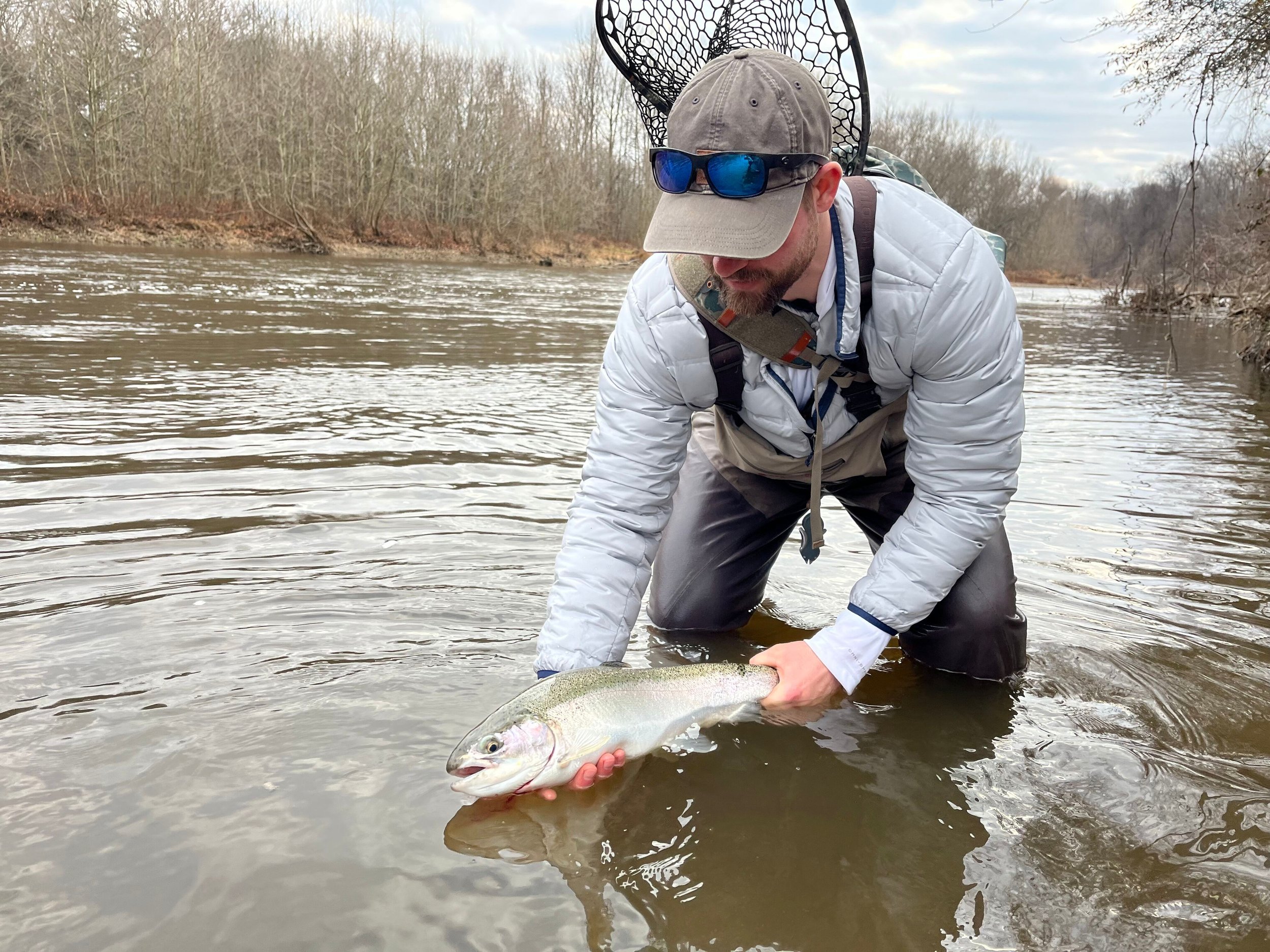
Swinging flies is less common than indicator fishing, although by a narrowing margin. Indeed, more and more anglers are employing switch or short spey rods to sling streamers for our steelhead – and for good reason. This style of fishing is rhythmic, athletic, and challenging, and it elicits violent eats when everything comes together. Ideal two-hand rods for steelhead alley’s small-to-medium sized rivers are 6 to 8-weight switch rods in lengths of 11 to 12 feet. Short, powerful Skagit heads with sink tips in various lengths and densities help anglers launch heavier payloads and drive flies long distances.
Tube or shanked flies in lengths between 2.5 and 4 inches, trailed with size 2 or 4 stinger hooks on level 20lb fluorocarbon leaders are the ticket for our fishery. Leader length is largely determined by the water’s clarity and rate of flow, ranging from over 4 feet down to just 16 inches. Shorter leaders, in fact, can be a distinct advantage to anglers as they provide a more direct connection to the sink tip which drops at a predictable rate – allowing anglers to know more precisely where the fly is located relative to the river bottom. Jeff Liskay’s Hot Head Triple Tail, rabbit strip Zonkers, craft fur Bad Hair Days, Intruder variations and Hoh Bo Speys in blacks, oranges, and purples are excellent choices in the fall. The “Halloween” color combo of bright orange over black is incredibly effective.
Neutrally buoyant flies tied on plastic tubes provide versatility as they can be fished at any speed and at a variety of depths, depending on the sink tip and how the angler manages the line on the water. They can be slow-rolled or deployed in shallow water with lighter sink tips without hanging up. They can also be sped up on downstream bellies of line, dropped and paused with slack, and driven deep with denser tips or added split shot. Weighted flies, much like the indicator angler’s clumped split shot, can be dropped into cuts and drop-offs with deadly effectiveness by feeding them slack at the right moment. Anglers can control the speed and depth of any fly by managing slack, mending, and altering rod tip placement. Lowering the rod tip or physically stepping toward the fly are both great ways to add slack to the system and drop flies into high-percentage zones.
Fall Fun
Lake Erie’s southern shoreline comes alive each fall with the return of our most sought-after migratory fish. They cruise our coastline and run up our tributaries by the thousands under autumn’s browns, reds, and pale yellows, making for a spectacular and quite scenic fishery. Fall fishing usually means hot fish so get out there, set your drag, and hold on tight.