
How Important Is Line Tension?

Cut ‘em Some Slack: How Controlling Line Tension Can Trigger More Eats
Originally published by Fly Fisherman in May 2026
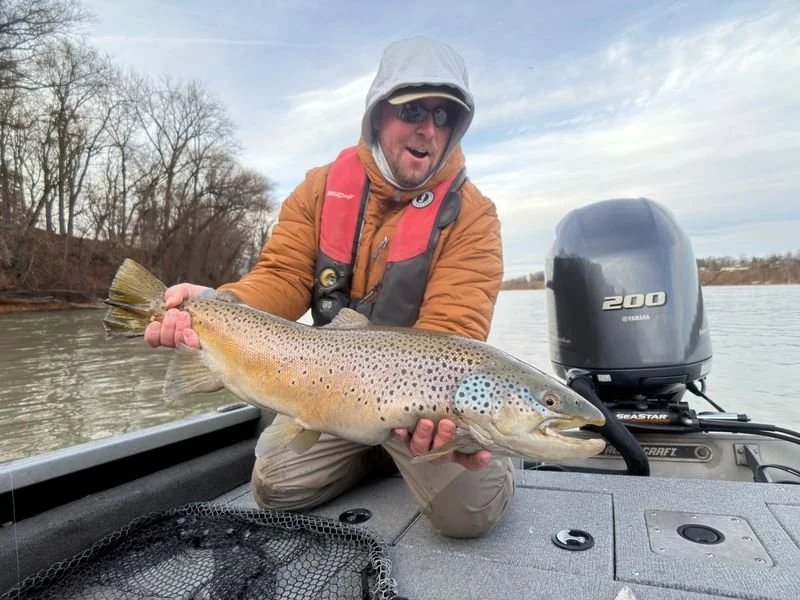
“Hold up, guys,” said Paul as an oversized brown trout slid smoothly from my hands toward the dark depths of the mighty Niagara River. “Did you notice that all three of those eats came on the same style of retrieve?” We hadn't, having been fully engrossed in our own repetitive sequences of casting, stripping, and swinging big streamers in the cold, clear December air. Heavy winds had churned up the eastern end of Lake Erie and the water, after entering the river and plummeting over the falls, was heavily stained. Countless casts over the previous two days had yielded modest, if not discouraging results, but the big, migratory brown trout we sought were finally starting to cooperate, and our guide, Paul Castellano, had observed something we three anglers had not.
Paul, searching for an edge on an otherwise tough day, had been watching us closely as he operated the Minn Kota around boulders and current seams while the three of us rotated in and out of the bow and stern casting positions. Amid the slugfest, rife with constant adjustments in gear and techniques desperately aimed at unearthing a solution, the fish gods smiled upon me. Three hungry browns smote my fly in just a few minutes, and Paul had seen enough. As that third fish returned to the river, he paused the group and recommended we all adopt a specific style of retrieve – namely, short, quick strips of line followed by pauses that fed slack back into the fly.
This retrieve, punctuated by deliberate thrusts and pulls on the rod, is one I had deployed many times on various rivers to maximize the actions of certain types of flies in current. It can be a somewhat painstaking style of fishing, but it’s effective, and it was a perfect match for the Circus Peanuts and Double Troubles we were fishing that day on the Niagara River. When paused on a slack line, these jig-style flies achieved a more pronounced up-and-down jigging action, and they could also be fished lower in the water column, where Paul said most of the fish would lurk in the stained water. Paul’s advice did the trick, and the trout responded in a big way, eating more flies in the next two hours than we had totaled all weekend. It was this small tweak, noticed by an expert guide, that proved to be a difference-maker when all other variables were relatively constant – and it was all about slack.
Why Do We Care About Slack?
We care about slack because we care about tension. Our flies, leader, and fly lines are impacted by current from the instant they hit the water until we remove them for the next cast. This is exceptionally true for stationary or wade anglers in rivers, where current seemingly seeks to destroy our presentations before they even begin. Excessive tension blunts the actions of even the most dynamic fly patterns, forces them to the surface, and removes our ability to dictate their speed. Verily, an angler’s ability to control the depth, speed, and actions of their flies is directly related to their ability to manage the tension on their line.
Slack for Fly Action
All flies are not the same, and even among streamers, the variety of actions built into modern patterns are important to understand. Anglers wishing to hook fish on modern streamers should know how their flies are designed to act and incorporate specific techniques to ensure they achieve their optimal actions. There are thousands of fly patterns to choose from, but they can generally be categorized into three types – swim, jerk, and jig flies. Swim flies, shockingly, are built to swim, with tails that kick side to side when water flows over them from front to back. They often have a tapered profile and incorporate specific materials that promote this serpentine or swimming movement. Anglers utilize slack to increase their depth and to add pauses in addition to slowing them down.
Jerk flies are designed to slash and dart from side-to-side, very much like jerk baits. Their tall profile, rear-loaded weight, and proportions promote quick accelerations followed by slashes and pauses – actions that are impossible to achieve in the absence of slack. Jig flies are equipped with front-loaded weight, often in the form of lead eyes or tungsten beads. This promotes an up-and-down “jigging” action when tension is properly manipulated. As an angler strips in line, jig flies rise. As slack is added and line tension decreases, they plummet toward the bottom. Thus, the actions of jerk and jig flies are completely reliant on properly managed line tension during the retrieve, which if managed properly, can be a catalyst for success.
Controlling Depth and Speed
The utilization of slack, alongside fly, line, and leader density, is absolutely critical for getting flies down in rivers. Our casting angle is the first variable we should consider when we need flies to gain depth in the water column. Quartering upstream casts can help facilitate increased depth, providing a longer period of time for flies to sink before mounting line tension encourages them to rise. Conversely, casts sent across or downstream decrease this free-falling window, thus immediately exposing flies to current and promoting shallower presentations. It is the unfortunate reality, however, that in all circumstances other than extremely slow current, our flies will be swept away from us, creating line tension that we must navigate. We are, however, far from powerless once this takes place. There are a handful of techniques we can deploy to re-inject slack into our retrieves to nullify current’s negative impact on our presentation.
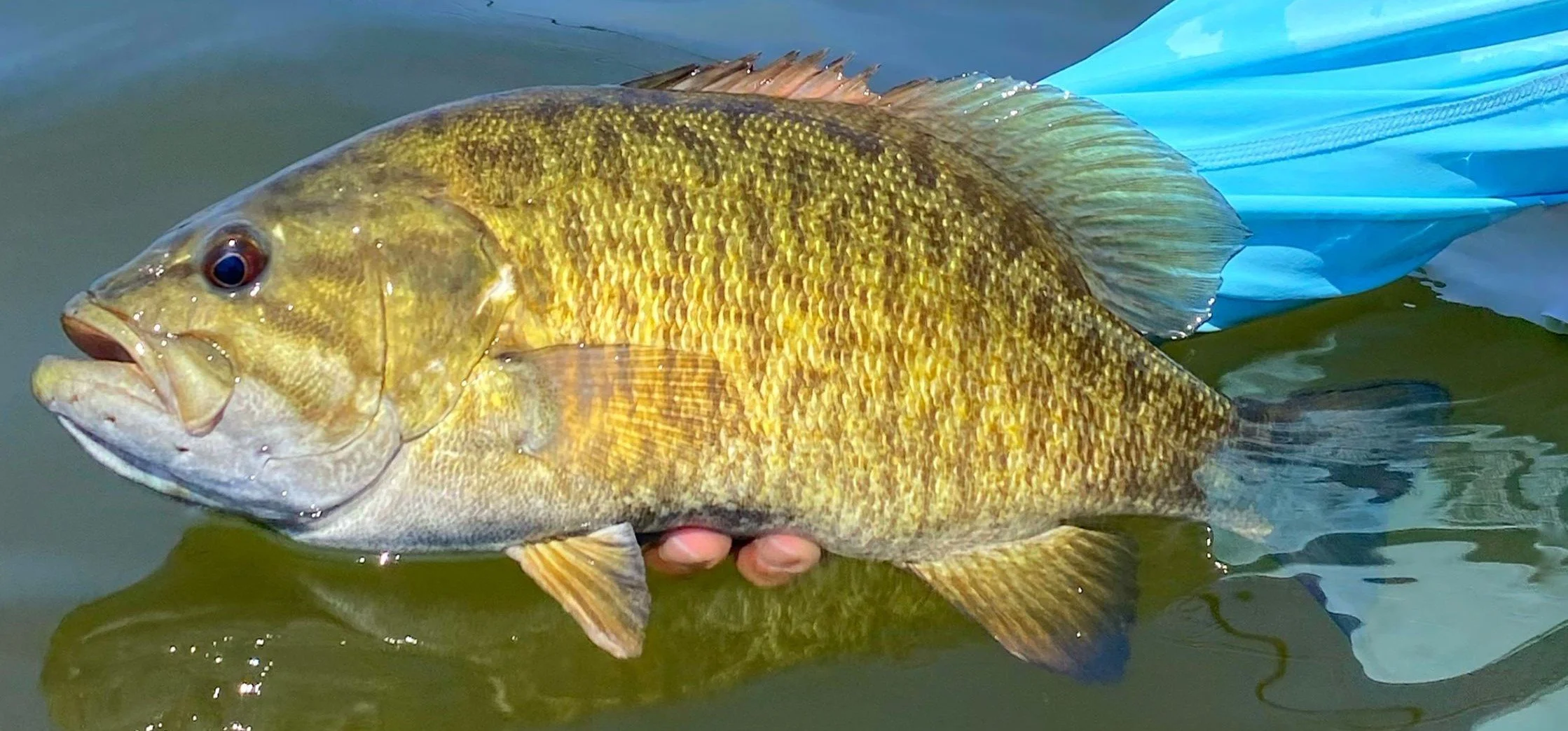
The speed of our flies is also heavily impacted by line tension, especially those swung downstream across the river’s current. While the orientation of the fly line on the water plays a role, flies swung on tight lines tend to move quicker than those offered on semi-slack lines. Thus, slack can be added to deliberately slow or even pause flies in high percentage zones. Conversely, removing slack to accelerate a fly and trigger a strike is a great technique at times. Most eats, regardless of species, occur in-between strips when flies pause or slow down, but accentuating this window and purposely “killing” the fly can be a deadly tactic for fish like smallmouth bass, that notoriously hammer paused flies that hang in the water column. Adding slack to fully stall a fly immediately following a series of short, erratic strips is an excellent way to trigger vicious strikes.
Adding Slack to the Retrieve
A streamer angler’s retrieve is arguably his most deadly weapon, with seemingly endless cadences and strips of various lengths, speeds, and pauses at his disposal. How we handle the time in-between strips, however, might be the most important variable of all. In rivers or waters of moderate or fast current, we often must create slack in our fly line during the retrieve to promote enhanced depth, speed, and action of our flies.
Fly rods, unlike spinning and baitcast rods that are raised or lowered to manage line tension, present some unique challenges. Their tips, after all, must remain low and pointed at the fly to facilitate solid hook sets. Thus, removing slack is best done by stripping in line. Adding slack, however, is a bit more tedious, and must be done by either mending or physically manipulating the distance between the rod and the fly.
Stepping “into” the fly is a tactic shared with spey anglers, who often take one to three steps toward their fly in order to let it drop lower in the water column. This technique, often used in the small and medium-sized rivers of the Great Lakes, is deployed to achieve a greater swing depth, or to suddenly kill or drop the fly into likely lies. When the angler steps forward it creates slack in the system, which sinks the fly abruptly. Once the tension is regained by the current, the fly quickly rises and continues its swing, triggering savage strikes. This same tactic can be used when stripping flies by stepping into streamers as we bring them back. This can involve a step or two at select moments or even become a slow walk downstream as we retrieve the fly. The faster the current speed, the more ground we must cover to keep the fly fishing on a semi-slack line.
A second method of adding slack requires a series of coordinated movements that rapidly increase and then decrease line tension without repositioning the angler. While retrieving a fly, the angler must simultaneously strip in line and pull the butt of the rod toward their body. This accelerates the fly a bit faster than strips alone (which can itself be a positive), but it also sets them up to add slack, as the rod is then immediately thrust back toward the fly following the strip and pull. This thrust instantly injects 12 to 16 inches of slack back into the system, letting weighted flies suddenly fall following an upward surge and swim and jerk flies to hang motionless in current following a hard kick or slash to one side. As with stepping toward the fly, the speed of the current dictates how often we must use this technique.
A third method of managing slack is mending line or manipulating the orientation of the running line as it sits on the water’s surface. Mending can be done before or during the retrieve to manage slack and control a fly’s depth and speed. Small mends added between series of strips and pauses will create an erratic retrieve that can trigger strikes. In general, mending downstream will increase line tension, accelerate, and lift flies, while mends made upstream will decrease tension, slow them down, and let them sink. Sinking and intermediate-tipped lines with floating running lines can sometimes be mended effectively, but floating lines are best suited for this tactic.
Cut Em Some Slack
Properly manipulating our flies via line control can be a challenge in moving water, especially in big, fast rivers like the mighty Niagara. The critical elements of fly depth, speed, and action, however, can be regulated when we deliberately manage the slack in our fly line. Between stepping into the fly, thrusting and retracting the rod, and mending running line, we can usually find a means of adding critical slack into our retrieves, and thus increase our chances of hooking up. It’s not always the easiest way to fish, but adding slack into retrieves in rivers and streams will put more fish in the net.